Open to research roles & collaborations

πŸ‘‹ Triman Kaur

"Children are already experts in their own worlds. My work is learning how to study those worlds well enough to build better ones."

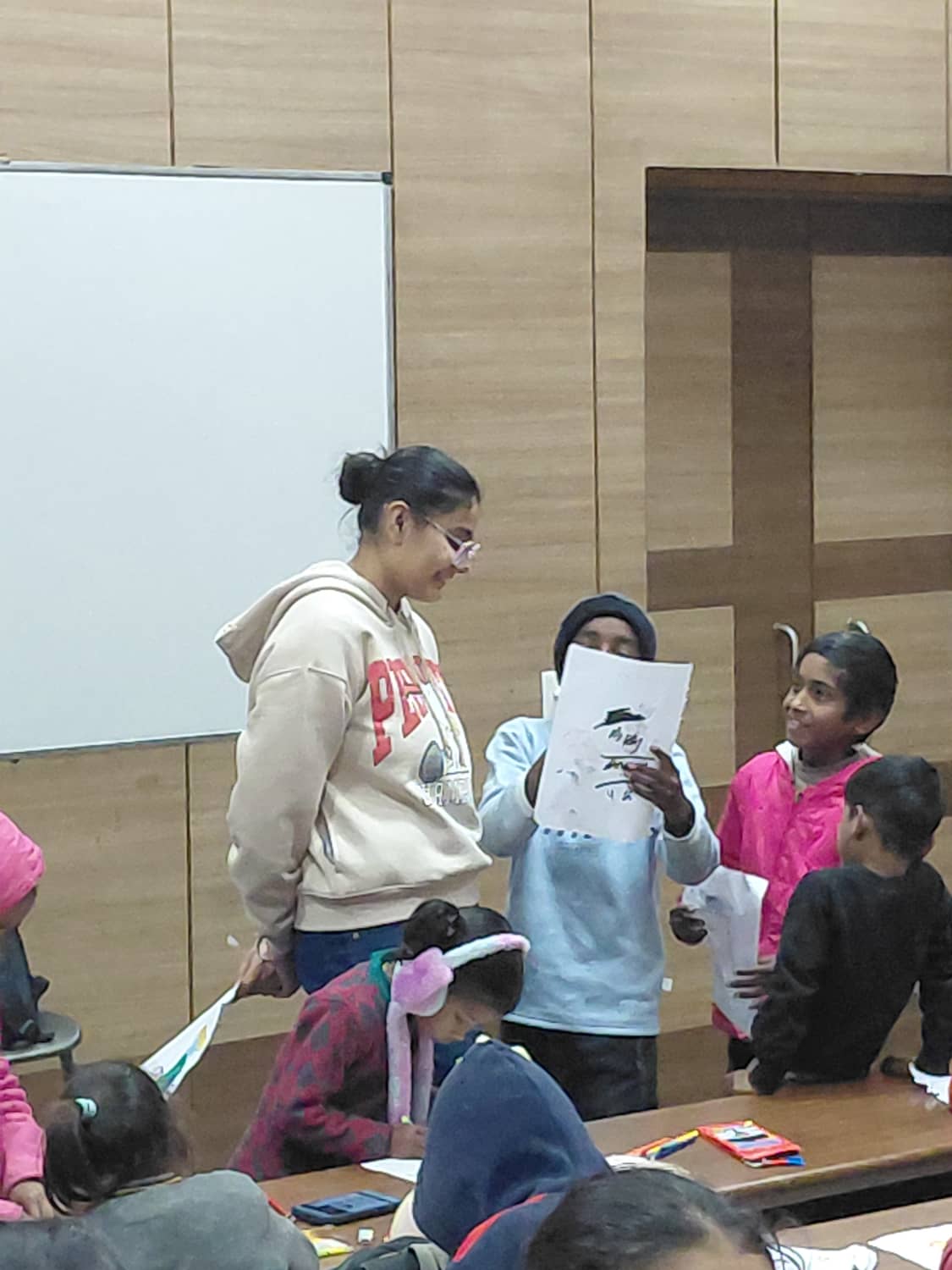
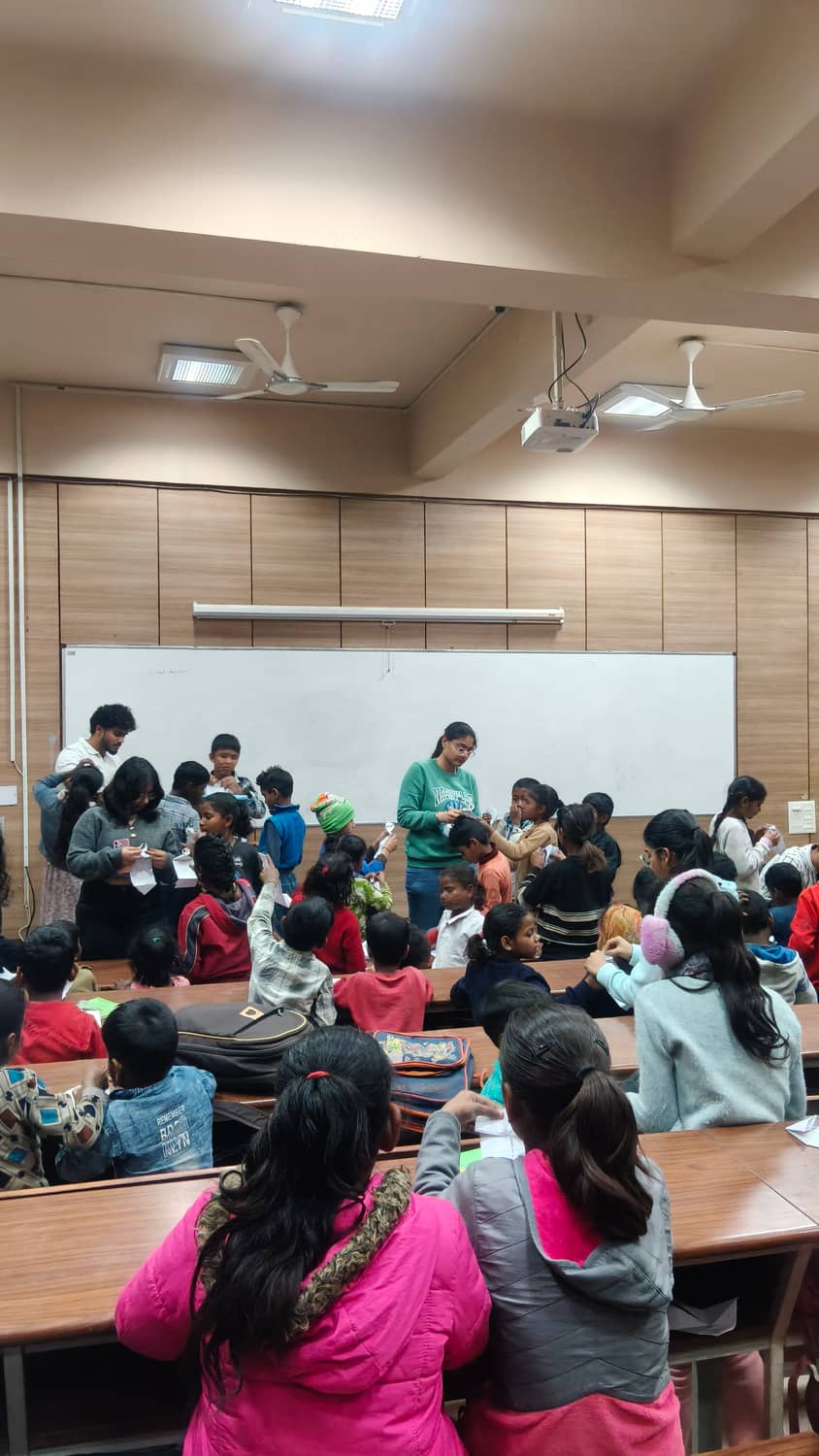
I'm studying cognitive science and psychology - but there's always been a pull towards children, a way of being naturally connected to them. I started out just volunteering at Pratigya Abhiyan, figuring things out on my own, and that's how I found what I actually care about. Now, even if it's only two hours a day, working with them is my favourite part of the day: teaching, running events, building playful ways to learn.

scroll
A little about me

Hi, I'm Triman.

I'm a senior, doing my BSc in Cognitive Science (Honors) with a minor in Psychology. But honestly - my academics are one thing, and the work I'm actually trying to do is another.

I've spent my last three years working with children. And the more I work with them, the more I realise how much I don't understand - the more confused I get, and the more I want to keep going. Their chaos has become my favourite part of the day. It's the one thing my own classroom was never going to teach me.

Lately I've been teaching myself experimental research - PsychoPy, OpenSesame, the messy business of designing a study and running it with real people. I like that work. But my favourite part is still the time around children: sitting on the classroom floor, listening to their random stories, trying to figure out what on earth they're up to, and managing the chaos of a room full of mixed-age kids.

If there's one thread running through everything I do, it's this - I want to work with children and build playful learning experiences for them. Low-SES classrooms are where I've built my expertise, with both neurodivergent and neurotypical kids, always hunting for that middle ground. I'm still learning. I'm curious, I'm open, and I struggle in this space as much as I love it.

Always up for a collaboration or a random chat - especially if you're on your own unconventional path, trying to do work like this. 🌱

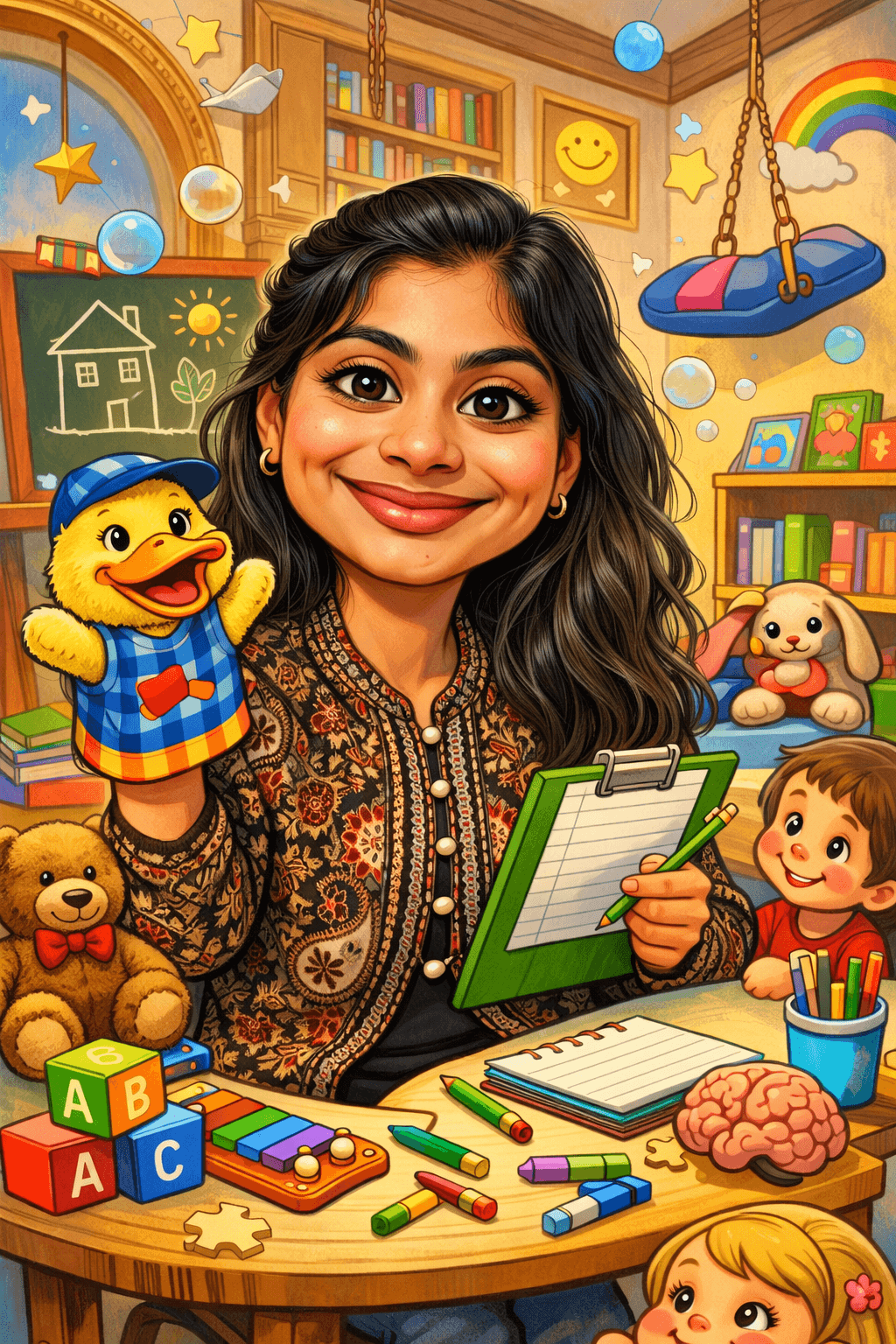
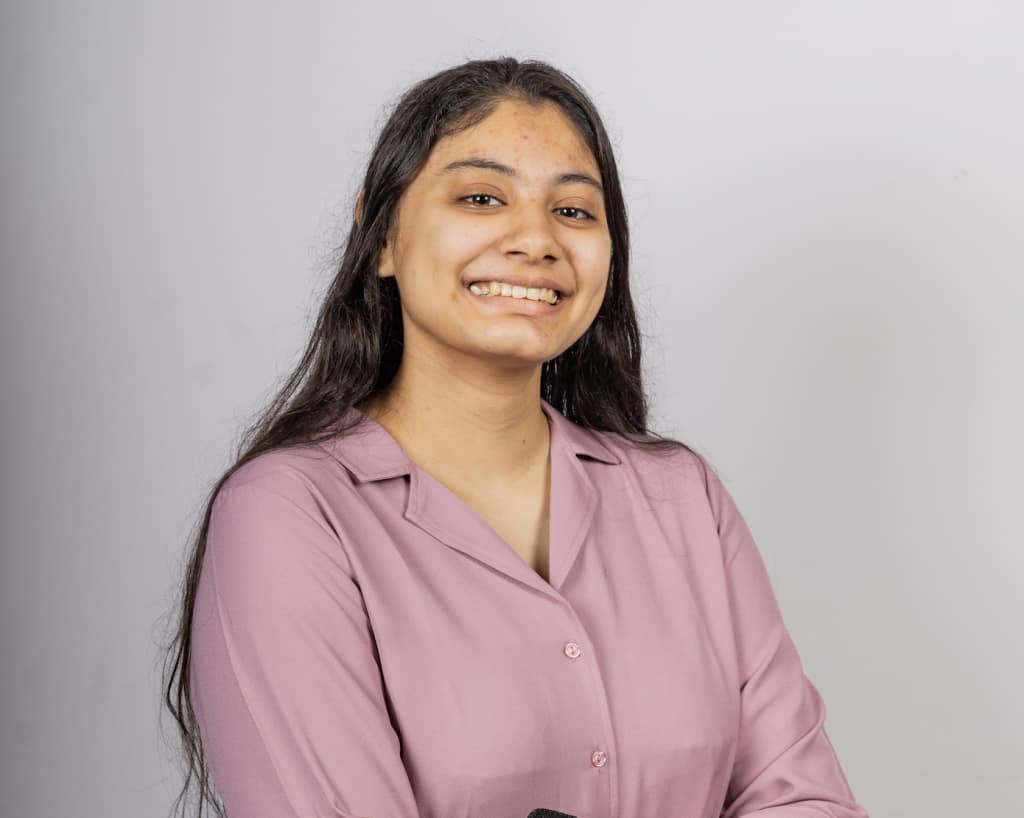
Illustrated caricature of Triman with a duck puppet, children, ABC blocks and a brain on the desk Portrait of Triman Kaur yes, that's me & a duck puppet πŸ¦†
What I bring

Skills I've built

🧩 The toolkit

Working with childrenProblem-solvingCreativity Small-group activitiesLarge-group activities Neurodivergent childrenNeurotypical children Culturally-relevant curriculum designManaging volunteersTeaching volunteers MentoringFacilitatingLow-SES expertise Clear communicationDocumentationEntrepreneurial skills Presentation makingCanva

Technical skills

ExcelPowerPointPython (Pandas, NumPy, SciPy, Matplotlib, Seaborn) C/C++MySQLSpyder

🌈 Across the whole range

I've worked right across the spectrum - neurotypical children, both privileged and low-SES, at Pratigya Abhiyan; and low-SES neurodivergent children at Samadhan India. There I was a special educator designing creative learning activities, led a sensory-integration workshop, shadowed as an occupational-therapy assistant, and became one of Samadhan's faces at national and state-level conferences. In my second stint I came back as a communications & outreach intern. I was even offered a project-coordinator role - and chose, for now, to keep building my expertise first, so I come back ready rather than start before I am.

Research & curiosity

The questions I keep walking toward

I work in both directions - running experiments at a screen, and taking field notes on a classroom floor. Here's what I'm chasing.

what I'm building toward

A playful learning curriculum for mixed-age, low-SES first-generation learners

Something built around the things standard executive-function tests don't measure - and made culturally relevant to the children actually sitting in front of me. That's the research question I'm slowly walking towards.

PI: Dr. Anuj Shukla Β· 2026my own study

Testing the Mental Timeline Hypothesis in adults

I wanted to know whether the culturally-learned sense that shorter durations sit on the left and longer ones on the right actually shows up in Indian adults. So I built the whole thing from scratch - a temporal bisection task in OpenSesame, 140 trials across 4 blocks and 2 counterbalanced conditions, run with 30 participants - recruited them, briefed and debriefed them, read deep into temporal processing, and presented the findings with descriptive and inferential statistics. I presented the paradigm at TICSR-2026, with a first-authored manuscript in preparation.

View the presentation β†’
PI: Dr. Kriti Vyas Β· Jan-May 2026qualitative

A 50-page longitudinal case study

A handwritten, 50-page longitudinal study of one Grade 5 first-generation learner I'd already taught for three years. From January to May I watched her across every domain - physical, cognitive, language, social, moral - then read her trajectory through Piaget, Erikson and Kohlberg, holding naturalistic observation and theory side by side. It's the piece of work I'm proudest of.

where it started

Two early studies that taught me the basics

Before those, two studies taught me the basic research skills - how research actually feels. I led a 5-member team on a binaural beats & attention study (PI: Dr. Richa Nigam, 2024), designing and running it end to end - testing binaural beats on Stroop accuracy across high- and low-anxiety groups. And for two months I worked on honeybee (Apis mellifera) olfactory memory (PI: Dr. Neeloy Chakraborty), learning slow, careful, hands-on lab procedure and data recording.

international facultychild development

Learning how research really works

I was curious about what research in this field actually looks like, so I reached out to her myself. I'm a remote participant in PI: Dr. Roberta Golinkoff's Child's Play, Learning & Development Lab at the University of Delaware - Fall 2025 through Summer 2026, my last semester. Reading alongside the lab is where I've learned to read, discuss and critically analyse papers on the latest infant studies, particularly language development and visual-spatial skills.

Research interests

Executive function as a predictor of school readiness in low-SES elementary children Culturally-relevant, play-based pedagogy as a cognitive intervention in early childhood Active, joyful learning as a mechanism to mitigate the effects of poverty Closing the school-readiness and achievement gap between low-SES and privileged peers
Things I've built

Each one started by watching a child and asking what they actually need, before deciding what to make

🏠 Pratigya Abhiyan Β· Academic Head, 2023 β†’ now

A low-SES, mixed-age, first-generation, loosely-structured academic-tutoring model - teaching children six days a week, two hours every evening.

What does an Academic Head do?

Three years in, I know every child by name - their strengths and their off days, which volunteer they like studying with, what songs they love, what they carry from home, their family and sibling dynamics. I've even taught most of their first cousins. That's the real advantage: getting to just be with them, enjoying what they do and why, collecting all those random stories.

And then there's the logistics. Ten children, two volunteers - who do you pair with whom? Only two classrooms, kids from Grade 1 to 12 - who sits where, based on what each child needs? You decide fast, you keep listening, and you're still teaching yourself the whole time, because it's an NGO and there's never quite enough hands or resources.

And the title itself? The visible positions were quietly kept for whoever worked in the limelight - the usual favouritism and politics. Academic Head came to me for the one reason that isn't political: I'm the one who actually knows the children.

UDAAN - the part no one prepares you for

UDAAN: why does it matter?

UDAAN is the one event where these children finally get a real stage - to perform the extra-curricular skills they've practised, in front of their parents, the way private-school kids get to by default. The catch is everything around it: the staffing, the politics, the thin resources. Three years of it could never fully prepare me - there's always something new going wrong. And that's exactly what taught me how an NGO really works: how to work within the constraints, and still enjoy my role and live my best life inside it.

My journey over the years

Across 2024, 2025 and 2026 I grew into the overall Performance Head - a big leap, and a strange one: I never had the formal authority, but I led anyway.

2024
First year. I didn't really know my role yet - I was exploring everything, like every other first-year. But I couldn't sit there with the children who weren't performing, watching them stare at the ones who happily were. So I stepped in and led a six-minute dance performance with 21 children.
2025
Second year. The strange in-between: you finally have some authority, but you're squeezed from every side - seniors, juniors, your own batch - everyone quietly keeping the people in position happy so they'll be handed the lead next year. I was always leading from the back. More than anything, it taught me how not to behave once you're in a leadership role.
2026
The year I didn't lead - and led anyway. The people in position couldn't pull it together, so it landed on me. And I shaped all of it: the ideation, assigning and mentoring volunteers, watching every single performance, deciding how many children and what each act was trying to say - while also running a whole act myself alongside.

For three years I'd watched parents walk away from UDAAN with nothing for themselves. So this time I didn't want just an annual day - I wanted an experience parents could actually learn from: a story that followed a child growing up in a low-SES home - the pressures from the world, from parents, from academics all at once - and how a parent can understand and stand beside them through it.

Children were the reason I kept going. They always are. Administration management isn't my thing, but it shows up anyway - and when the volunteers, the children, and most of the time even the people in charge all come to you when they need an answer, I think that proves the point. Who's in the lead, anyway?

The main day is a game of chance. The magic is everything before it - a month of small, casual, everyday wonder, run on three hours of sleep.

β–ΆUDAAN 2024
β–ΆUDAAN 2025
β–ΆUDAAN 2026
πŸ”¬ STEM Conclave 2026 Β· Student Experience Lead

In the middle of UDAAN, a research project, my final papers and my academics, this event dropped into my lap. The irony of an NGO: it uses you like a sponge and rarely hands you the authority to match - yet you're still expected to deliver, on top of everything you're already carrying.

I was designing an experience for first-generation, low-SES 10th-graders about to enter 11th grade - kids weighing whether to choose science, who had never been introduced to it, or shown what it could look like in their future. The whole student experience was about capturing that and bringing it alive: making it feel real, making it feel theirs, making them feel they belong here.

The hard part was mapping four stations so 100 girls could explore an engineering college from every side - and clubbing it all into a single hour: briefing every volunteer, meeting each child at her level, telling the teachers why each station mattered, and leading right alongside. Every detail mattered, and every detail was designed by me in some way. Sanjhi Sikhiya organised it, bringing together Avanti Fellows, Youth United and Pratigya Abhiyan's volunteers - but this was the part I designed and led, from the front and from behind. A step closer to what I want to build for elementary children, and a glimpse of what's possible under my leadership. The Indian Express covered it too, at the level they can imagine. I wanted to give them an experience that finally lets them visualise themselves, and think: maybe this is for me too.

AAC toollow SESneurodiversity

Bolo

An icon-driven AAC prototype for speech-delayed and neurodivergent kids, built from two years of watching children at Samadhan India struggle to be understood - and shaping the vocabulary around what they actually needed to say.

early literacylow SESphonics app

Akhar Awaaz

A low-cost, multi-sensory phonics app for kids learning English as a non-native language - born straight out of teaching at Pratigya. It stretched on-task attention from 10 to 35 minutes.

writing

Queen's Commonwealth Essay Competition

Silver Award winner, 2022 and 2023 - back to back. Long before the apps and the studies, writing was how I first made sense of all of this.

sustainabilitylow SES

Sprout

Sprout began as a sustainability project - an introduction to careers in climate change, and education about it, for underprivileged tier-2 and tier-3 college students. But when I was running the pre-workshops at two of those government schools, I realised the gap was still grassroots: quality education for children living in poverty - as opposed to rote academic tutoring, and the societal expectations of life set against the hard daily reality they face. Sprout became another way of understanding that - and everything keeps coming back to bringing curiosity back, whether through playful learning or designing a whole new curriculum.

A few things I'm proud of

Rooms I'm grateful I got to stand in

πŸš—

BeVisioneers - the Mercedes-Benz Fellowship

I joined at 17, the youngest in my cohort - selected from 600+ global applicants, flown to Stuttgart fully funded with a €3,000 grant. The three-year fellowship wrapped up in June 2026.

🌐

5th UNCTAD Global Youth Forum

Selected as a Youth Delegate, on international education and inclusive development.

🌏

Global Youth Ambassador (Theirworld)

Using the platform to raise my voice for grassroots community work - the change I'm building at home - alongside a network of peers doing the same.

Off the clock

When I'm not in a classroom

I play with every indie dog that lets me. I'm a casual basketball hooper - shooting hoops here and there. And I'm deep into the WNBA right now, because everyone watches women's sports.

🐢

Indie dogs, always

Feeding them, playing with them, befriending every street dog on the way.

πŸ€

Casual hooper

Shooting hoops here and there - badly, happily.

πŸ€–

Vibe-coding, lately

Randomly exploring AI tools, and vibe-coding my way through - like building a second brain.

πŸ†

Deep into the WNBA

Can't decide between the Indiana Fever, Dallas Wings and New York Liberty - I'm open to a debate on that. πŸ‘€

One more thing, if you're curious

A little piece I wrote

For the Youth Foresight Fellowship 2025 (the year's theme was education), I wrote this as my application to become a fellow. I didn't get in - but I made the top 200 and got an acknowledgement mail that still makes me smile. It's the piece that still best captures the effect I want to have. Here it is.

Open the original PDF β†’
β–Έ Read it here - "Ik zindagi, 100 khwahishaa"

Today, we are in conversation with the local leaders from all corners and communities of India. From a self-made autistic firm owner to a teacher who rewards failures, from teaching how to carve your own stories to the geek of sustainable Jugaad, and the Sapnon Ka Saathi (Partner of Dreams).

Our national vibe check for the day is: "Ik zindagi, 100 khwahishaa, ik ik mai puri kran." (One life, 100 dreams, one by one, we'll fulfil them all)

Vamika - "Sapno Ki Pari Didi"

Interviewer: Meet Vamika, a young 19-year-old entrepreneur from Bihar who gives grants to teens like her to kickstart their dreams. Some of those she has supported have impacted more than 10,000 youth in India.

It all started when someone believed in me and gave me a chance to make my dreams a reality. When I was in grade 10, I really wanted to be part of a summer camp that taught high schoolers entrepreneurship. Coming from a modest family, I knew my parents couldn't fund my trip. Thus, with just a seedling idea and an essay full of hope, I applied - and I got selected. Coming back, I realized how many peers like me are wandering, waiting for someone who wants more than just a pat on their back to kickstart their journeys. With the remaining money, I started training the youth, helping them carve their unique paths, and gave them a small grant to begin. Even if they don't get their desired outcome, it gives them hope and inspires a chain of youth to do the same.

Aman - computer skills in the slums of Punjab

Many of you know me by the name Aman, though my original name was Vadik. It wasn't until a teacher came into my life and told me it was okay to express myself the way I wanted. When I met Triman Di, she introduced me to a new way of learning. School bored me and I could never grasp concepts there - but Triman taught the same concepts in a drastically different way. She made me learn a table by asking me randomly and spent hours teaching me just four English letters in a two-hour class. Time used to fly when I studied at Pratigya Abhiyan. By the time I learned typing in grade 4, I already knew how to read letters fluently.

She never said no to anything. Once, I brought my three-year-old brother to tuition, and she still taught him something. I remember her bringing us chocolates from different countries she visited, and telling us stories about how she got into those opportunities - which motivated me to keep learning and think, one day I will too. Now I want to teach the peers around me computer basics, so I could help them escape this cycle mentally and then physically. I dream of taking my teachings to the most remote places in India through my students.

Mohit - from non-verbal to firm owner

You just need one person to believe in you. I was that person whom everyone lost hope with - non-verbal, with no parents, just one grandmother who took me to therapy every day. There was one place I used to go for therapy at Samadhan - my second home. My grandmother told me it was due to the interns at Samadhan that I am who I am today. They believed in me and patiently repeated a single thing ten times just because my brain was wired differently - and gave me a voice. In return, I want to help youth like me grow as I was given a chance. As she always said: "Mohit, tu karta sab kuch hai, baakio ko samajhne mein thoda samay lagta hai."

Srishti - the teacher who rewards failing

This idea came into being when I fell during a race on sports day even though I was winning. My teacher rewarded me for failing: "If you hadn't failed today, you'd never have tried another race, because you'd have become overconfident." Today I always start with this concept. It makes my children try so many different things that they find themselves and their gifts along the way - most of them, even though they started for the reward, end up doing something out of purpose, not the reward.

Nehrashi - sustainability through Jugaad

I love to teach underprivileged children sustainable living through what they already know indigenously - the term called Jugaad. Once, on a field trip, I asked them to invent imaginary dishes from whatever was in the garden, and was amazed to see composting, recycling and reusing - green knowledge we assumed only private-school children had. Sustainability isn't new to them; they just need the language to express it.


As we close for the day, we see a remarkable shift: the Indian youth is not just surviving but thriving. Now, the most successful isn't the one with money, but the one who can win trust and be compassionate on the inside. Wake up, India - the youth you call today has taken UDAAN. πŸ•ŠοΈ

Say hi

Let's have a chat

I'm always open for a side chat. If you're working on anything that helps kids, especially from low-SES backgrounds, learn beyond rote tutoring and find their curiosity again, I'd genuinely love to talk. Research, collaborations, or just a random conversation.

Patiala & Delhi, India Β· usually somewhere near a classroom.

Γ—Curious about something, or want to send a quick hello? I can help β†’